


Heart disease often develops silently, showing subtle signs long before a major health crisis occurs. Recognizing these early symptoms can make all the difference in preventing complications and seeking timely medical care. In this post, we’ll explore 10 important signals that may indicate your heart is under strain—from unusual fatigue to swelling in the legs—so you can stay informed and proactive about your cardiovascular health.
10 Early Signs You May Have a Weak Heart: Spot These Warning Signs Before It's Too Late
Discover the 10 early signs you may have a weak heart (heart failure symptoms) including fatigue, shortness of breath, leg swelling, sudden weight gain, and more. Learn causes, risk factors, prevention strategies, diagnosis, latest treatments in 2026, and lifestyle tips to protect your heart health and improve quality of life.
Heart disease continues to be a leading global health challenge, and a “weak heart”—clinically termed heart failure or cardiomyopathy—often progresses quietly for years before noticeable symptoms appear. In heart failure, the heart muscle weakens, stiffens, or becomes damaged, making it unable to pump blood efficiently to meet the body’s oxygen and nutrient demands. Fluid can back up into the lungs, legs, and abdomen, triggering a cascade of uncomfortable and potentially dangerous symptoms.
· Are You Calm? 7 Ways to Find Inner Peace & Reduce Stress
· 15 Best Kitchen Foods & Ingredients to Boost Your Immune System Naturally
· 5 Delicious Ways to Enjoy Fiber-Packed Pumpkin Seeds for Better Health
Recent statistics paint a concerning picture. As of the latest 2025–2026 reports, approximately 6.7 million Americans over the age of 20 are living with heart failure. Projections indicate this number could rise to 8.7 million by 2030, 10.3 million by 2040, and 11.4 million by 2050. The lifetime risk stands at about 24%—meaning roughly 1 in 4 people may develop heart failure. Heart failure contributed to over 425,000 deaths in recent data, accounting for nearly 45% of all cardiovascular deaths in the United States. Globally, prevalence has increased significantly, affecting tens of millions, with varying causes across regions such as hypertension and ischemic heart disease being dominant.
The encouraging news is that early detection can slow progression, improve symptoms, reduce hospitalizations, and in many cases enhance long-term outcomes through timely medical intervention and lifestyle modifications. Many people dismiss early signs as normal aging, stress, or minor ailments, but recognizing them promptly can be life-saving.
This in-depth, SEO-optimized article explores the 10 early signs you may have a weak heart, backed by insights from the American Heart Association (AHA), Mayo Clinic, and recent 2025–2026 statistics. We’ll cover the science behind each symptom, risk factors, prevention strategies, diagnostic tests, current treatment options (including 2026 updates), daily management tips, and more. If you or a loved one experiences multiple symptoms, consult a healthcare professional right away—do not self-diagnose.
Table of Contents
- What Is a Weak Heart? Understanding Heart Failure and Its Types
- The 10 Early Signs You May Have a Weak Heart (with detailed explanations)
- Differences: Heart Failure vs. Heart Attack vs. Cardiomyopathy
- Common Causes and Risk Factors for a Weak Heart
- Heart Failure Symptoms in Women, Men, and Younger Adults
- How to Prevent a Weak Heart: Evidence-Based Lifestyle Strategies
- Diagnosing Heart Failure: Tests and Procedures You May Encounter
- Treatment Options for a Weak Heart – Including 2026 Advances
- Living Well with a Weak Heart: Daily Management and Monitoring Tips
- Conclusion: Take Action to Protect Your Heart
- Frequently Asked Questions (FAQs)
What Is a Weak Heart? Understanding Heart Failure and Its Types
A weak heart, or heart failure, occurs when the heart cannot pump sufficient blood to satisfy the body’s needs. It is not the same as a heart attack (which is a sudden blockage) or cardiac arrest (when the heart stops beating). Instead, heart failure is often a chronic, progressive condition that can result from prior damage.
There are two primary categories:
- Heart Failure with Reduced Ejection Fraction (HFrEF): The heart muscle weakens and cannot contract strongly enough to eject adequate blood.
- Heart Failure with Preserved Ejection Fraction (HFpEF): The heart muscle becomes stiff and cannot relax properly to fill with blood, though ejection fraction remains near normal. This type is increasingly common, especially in older adults and those with hypertension or obesity.
Failure can affect the left side (impacting lungs), right side (causing leg and abdominal swelling), or both (congestive heart failure). Symptoms often begin subtly and worsen over time if untreated. Early intervention is critical because heart failure can lead to complications like kidney damage, arrhythmias, and frequent hospitalizations.
The 10 Early Signs You May Have a Weak Heart
These signs are consistently highlighted by major health organizations. They may occur individually or in combination and can mimic other conditions, so professional evaluation is essential.
1. Shortness of Breath (Dyspnea)
One of the hallmark early signs of a weak heart is feeling breathless during routine activities such as climbing stairs, walking short distances, or even while resting. Many people experience paroxysmal nocturnal dyspnea—waking up at night gasping for air and needing to sit up or use extra pillows to breathe comfortably.

Shortness of breath, especially during mild activity or when lying down, is one of the most common early signs of a weak heart.
Why it happens: A weakened left ventricle fails to pump blood forward efficiently, causing fluid to leak into the lung tissues (pulmonary congestion). This impairs oxygen exchange. Symptoms often worsen when lying flat because fluid redistributes.
· Best Morning Routine 2026: 10 Science-Backed Habits for Energy & Joy
· First-Time Mom's Survival Guide: 15 Pregnancy Problems & Solutions
· Sustainable Beauty Trends 2026: Healthy Fashion Guide
What to watch for: Breathlessness that was previously absent or that progressively limits daily life. Track when it occurs and discuss patterns with your doctor.
2. Persistent Fatigue and Weakness
Unexplained, lingering tiredness—even after adequate rest or minimal physical effort—is another common indicator. Simple tasks like grocery shopping, doing laundry, or climbing a few steps can leave you drained and sleepy.
 Feeling unusually tired even after rest can indicate your heart is not pumping efficiently.
Why it happens: Reduced cardiac output means less oxygen-rich blood reaches muscles and organs. The body prioritizes vital areas, leaving peripheral muscles fatigued.
Real-life insight: Many initially blame aging, poor sleep, or work stress, but when combined with other symptoms, it signals declining heart efficiency. Keeping an energy journal can help identify trends.
3. Swelling in Legs, Ankles, and Feet (Edema)
Puffy ankles, shoes that feel tighter by evening, or visible sock indentations that linger are classic signs. Swelling may lessen overnight but return during the day.
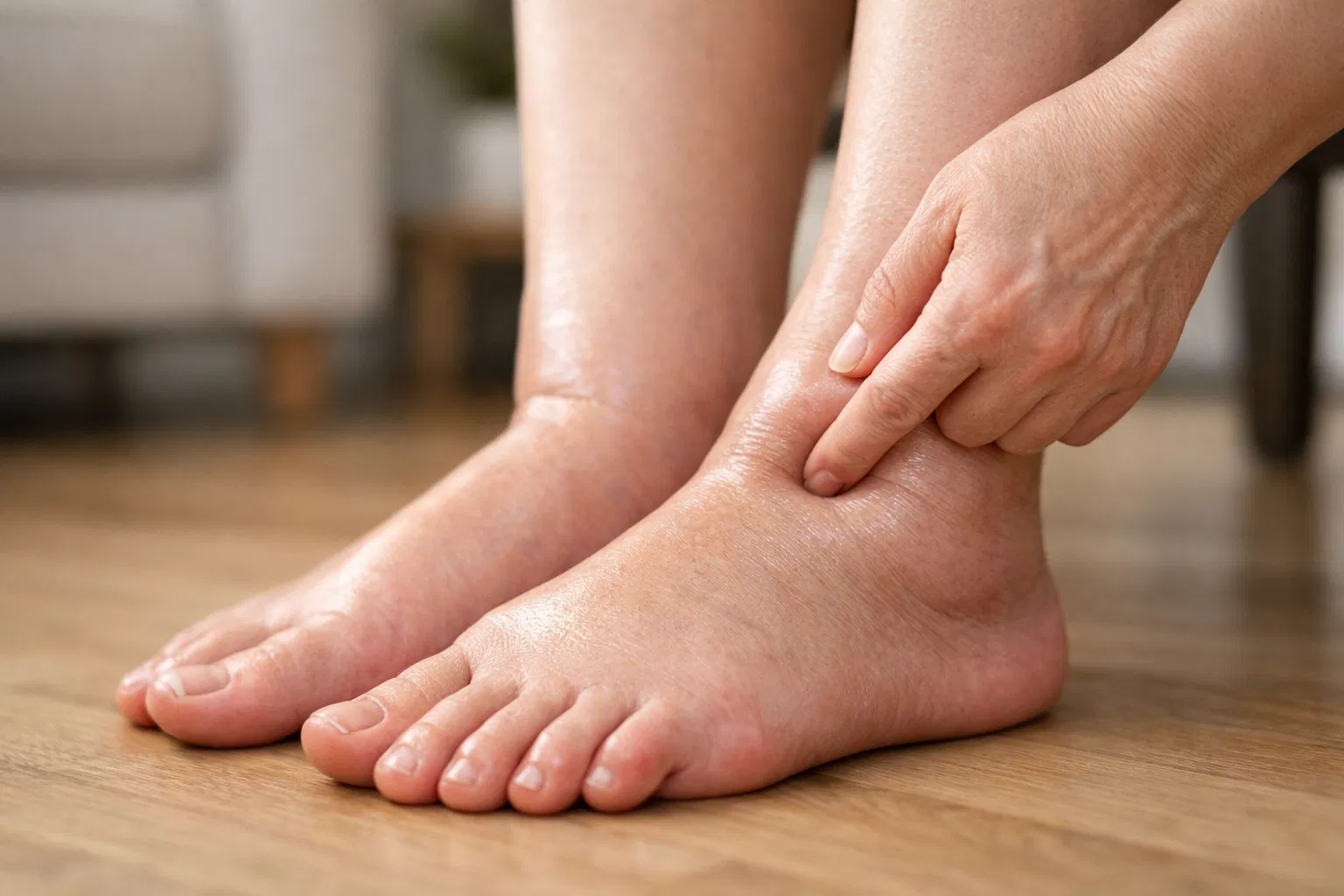
Swelling in the lower legs, ankles, and feet (edema) often worsens by the end of the day.
Why it happens: In right-sided heart involvement, blood backs up in the veins, forcing fluid into surrounding tissues due to gravity. This is known as peripheral edema.
When to act urgently: Sudden or one-sided swelling should prompt immediate medical attention to rule out blood clots or other issues. Daily weight monitoring helps detect fluid retention early.
4. Persistent Cough or Wheezing
A dry, nagging cough—sometimes producing white or pink-tinged frothy mucus—that worsens when lying down can indicate fluid in the lungs. It may resemble a chronic cold, allergies, or asthma but persists without other respiratory infection signs.
 A lingering dry cough or wheezing, especially at night, may signal fluid accumulation in the lungs.
Why it happens: Pulmonary congestion irritates the airways. Wheezing occurs as narrowed passages struggle with airflow.
5. Rapid or Irregular Heartbeat (Palpitations)
Sensations of fluttering, pounding, racing, or skipped beats in the chest, even at rest, suggest the heart is working harder to compensate.
 Fluttering, racing, or skipped beats can mean your heart is struggling to maintain output.
Why it happens: To maintain output despite weakness, the heart may speed up or develop arrhythmias, which further strains the muscle over time.
Practical tip: Use a fitness tracker or smartwatch to monitor heart rate. Resting rates consistently over 100 bpm or frequent irregularities warrant evaluation.
6. Sudden Weight Gain
Gaining 2–3 pounds overnight or 5+ pounds in a week—without changes in diet or activity—often reflects fluid buildup rather than fat.
 Gaining 2–3 pounds in a day or 5+ pounds in a week without diet changes is a key red flag.
Why it happens: Poor kidney perfusion leads to sodium and water retention. This is one of the most objective early warning signs.
· Best Free Wild Animals & Birds: Explore Amazing Wildlife Photos, Facts & More!
· Cancer-Causing Foods: The Ones You Must NEVER Eat Again!
· What Happens to Your Body During a Detox Diet? Effects Explained
Pro tip: Weigh yourself every morning at the same time (after using the bathroom, before eating) while wearing similar clothing. Report unexplained gains promptly.
7. Reduced Ability to Exercise or Activity Limitation
You may notice a sharp decline in stamina. Activities you once enjoyed, such as jogging, cycling, or even household chores, now cause quick exhaustion or require frequent breaks.
 If you tire much faster than before during exercise or daily tasks, it could indicate declining heart function.
Why it happens: Limited oxygen delivery during exertion reduces endurance. This is a key component in common acronyms like FACES (Fatigue, Activity limitation, etc.).
8. Nausea, Loss of Appetite, or Feeling Full Quickly
Digestive discomfort, early satiety, or reduced interest in food can emerge.
 Digestive issues like nausea or early fullness can occur when blood flow to the gut is reduced.
Why it happens: Congestion in the abdomen or reduced blood flow to the gut slows digestion. Over time, this can contribute to unintended weight loss despite fluid retention elsewhere.
9. Difficulty Concentrating, Confusion, or “Brain Fog”
Memory lapses, trouble focusing, or mental cloudiness—sometimes first noticed by family members—can occur.
 Reduced blood flow or electrolyte changes can cause memory issues and mental cloudiness.
Why it happens: Reduced blood flow to the brain or shifts in electrolytes/sodium levels impair cognitive function.
10. Abdominal Swelling or Bloating (Ascites)
A distended belly, tight waistbands, or persistent bloating signals fluid accumulation in the abdomen, often linked to right-sided heart strain.
 Swelling in the abdomen (ascites) often accompanies leg swelling in right-sided heart involvement.
Why it happens: The heart cannot effectively manage venous return, leading to backup in the abdominal cavity.
These 10 early signs frequently overlap. Experiencing two or more, especially persistently, significantly raises concern. Do not ignore them—early action matters.
Differences: Heart Failure vs. Heart Attack vs. Cardiomyopathy
It’s important to clarify terminology for better understanding:
- A heart attack is an acute event where a blocked artery deprives heart muscle of blood, causing tissue damage.
- Heart failure is the chronic result of the heart’s reduced pumping ability, which may follow a heart attack or other conditions.
- Cardiomyopathy refers to diseases of the heart muscle itself that can lead to heart failure.
Heart failure develops gradually in most cases, while a heart attack is sudden. Symptoms can overlap, but context and testing differentiate them.
Common Causes and Risk Factors for a Weak Heart
Leading causes include coronary artery disease, previous heart attacks, long-standing high blood pressure (which forces the heart to work harder), heart valve disorders, arrhythmias, diabetes, obesity, sleep apnea, viral infections, excessive alcohol or drug use, and genetic factors. Risk rises with age (especially over 65), family history, smoking, high cholesterol, sedentary lifestyle, and multiple comorbidities like obesity plus diabetes plus hypertension.
Approximately one-third of U.S. adults are at Stage A risk (high risk but no symptoms), and many have pre-heart failure (Stage B).
Heart Failure Symptoms in Women, Men, and Younger Adults
Symptoms can differ by demographics. Women often report more atypical signs such as fatigue, nausea, indigestion-like discomfort, back or jaw pain, and shortness of breath without classic chest pain. Men may experience more pronounced chest discomfort or palpitations. In younger adults, rising rates linked to obesity, diabetes, and lifestyle factors mean symptoms should never be dismissed as “just stress.”
How to Prevent a Weak Heart: Evidence-Based Lifestyle Strategies
Prevention remains one of the most powerful tools. Follow these AHA-recommended approaches:
- Adopt a heart-healthy diet: Emphasize fruits, vegetables, whole grains, lean proteins (fish, poultry, legumes), nuts, and healthy fats (olive oil). Follow DASH or Mediterranean patterns. Limit sodium to under 2,300 mg daily (ideally 1,500 mg if you have heart issues), saturated fats, trans fats, added sugars, and ultra-processed foods. Aim for 2–3 servings of fish weekly.
- Stay physically active: Target at least 150 minutes of moderate aerobic activity (brisk walking, swimming, cycling) or 75 minutes of vigorous activity per week, plus strength training 2+ days. Even light daily movement helps. Cardiac rehabilitation programs provide guided support.
- Maintain a healthy weight: Losing even 5–10% of body weight if overweight can reduce strain on the heart.
- Quit smoking and limit alcohol: Tobacco damages blood vessels; excess alcohol directly weakens heart muscle.
- Control underlying conditions: Manage blood pressure, cholesterol, diabetes, and sleep apnea through medication and monitoring.
- Prioritize sleep and stress management: Aim for 7–9 hours of quality sleep nightly. Practice mindfulness, meditation, or yoga to lower chronic stress.
- Stay vaccinated: Prevent infections (flu, COVID-19, pneumonia) that can exacerbate heart strain.
Consistent adherence to these habits can significantly lower risk and support better heart function even after diagnosis.
Diagnosing Heart Failure: Tests and Procedures You May Encounter
Diagnosis typically starts with a thorough medical history and physical exam. Key tests include:
- Blood tests (BNP or NT-proBNP levels elevate with heart strain; also check kidney function, electrolytes, and troponins).
- Chest X-ray (to detect enlarged heart or lung fluid).
- Electrocardiogram (EKG/ECG) for rhythm and electrical abnormalities.
- Echocardiogram — the gold standard ultrasound that measures ejection fraction, chamber size, and valve function.
- Stress tests, cardiac MRI, or right heart catheterization in select cases for more detailed assessment.
Scoring systems like H₂FPEF or HFA-PEEF help evaluate HFpEF likelihood. Early diagnosis via echocardiography can identify issues before severe symptoms develop.
· Best Anti-Inflammatory Foods for Deep, Restful Sleep
· 2026 Fashion Trends: How to Style Bold Animal Prints and Vibrant Hues Like a Pro
· Best Morning Routine 2026: 10 Science-Backed Habits for Energy & Joy
Treatment Options for a Weak Heart – Including 2026 Advances
Treatment is individualized and often combines medications, devices, lifestyle changes, and sometimes procedures.
Guideline-directed medical therapy commonly includes:
- Diuretics to reduce fluid overload.
- ACE inhibitors, ARBs, or ARNIs (e.g., sacubitril/valsartan) to ease heart workload.
- Beta-blockers to slow heart rate and improve efficiency.
- SGLT2 inhibitors (beneficial across ejection fraction types).
- Mineralocorticoid receptor antagonists (including newer non-steroidal options like finerenone for HFpEF).
For HFpEF, incretin-based therapies (GLP-1 receptor agonists) and other novel agents show promise. Device options include pacemakers, implantable cardioverter-defibrillators (ICDs), cardiac resynchronization therapy, or left ventricular assist devices (LVADs) in advanced cases. Surgical interventions may involve valve repair, bypass, or—in severe situations—heart transplant.
In 2026, ongoing advances include investigational non-surgical devices (e.g., interatrial shunts) and refined pharmacologic approaches targeting inflammation and cardiac metabolism. Many patients achieve stable, high-quality lives with proper management.
Living Well with a Weak Heart: Daily Management and Monitoring Tips
- Monitor weight daily and report gains of 2–3 lbs in a day or 5 lbs in a week.
- Track symptoms, blood pressure, and heart rate.
- Limit fluid intake if advised (often 1.5–2 liters daily).
- Elevate legs when sitting to reduce swelling.
- Participate in cardiac rehab or supervised exercise programs.
- Join support groups for emotional and practical guidance.
- Maintain regular follow-ups with your cardiologist and stay current on vaccinations.
Conclusion: Take Action to Protect Your Heart
Recognizing the 10 early signs you may have a weak heart is the first step toward better outcomes. Heart failure is serious but increasingly manageable—and in many cases preventable—through awareness, healthy habits, and modern medicine. Listen to your body, schedule regular check-ups, and share this knowledge with family and friends.
If any symptoms resonate with you, contact a healthcare provider promptly. Early intervention truly can add years of healthier living. Bookmark this guide, consult professionals for personalized advice, and prioritize your cardiovascular health today.
Frequently Asked Questions (FAQs)
Q1: Can a weak heart be reversed or cured? Early-stage cases can improve significantly or stabilize with aggressive treatment and lifestyle changes, though some muscle damage may remain permanent.
Q2: Are these signs only relevant for older people? No. While risk increases with age, rising obesity, diabetes, and lifestyle factors mean younger adults are also affected.
Q3: How quickly should I see a doctor if I notice these signs? Seek evaluation soon if symptoms are new, persistent, or worsening—especially if multiple signs appear together. Sudden severe symptoms require emergency care.
Q4: What is the difference between a weak heart and cardiomyopathy? Cardiomyopathy is a disease directly affecting the heart muscle that frequently leads to heart failure (weak heart).
Q5: Can diet and exercise alone manage a weak heart? They are essential components but usually work best alongside prescribed medications and medical supervision.
Q6: What is the outlook for someone diagnosed with heart failure? Outcomes vary widely depending on stage, cause, and adherence to treatment. Many people live active lives for years with proper care.
Q7: Are there any natural supplements recommended for heart health? Some like omega-3 fatty acids may offer supportive benefits, but always discuss with your doctor before starting supplements, as they can interact with medications.
Stay proactive—your heart health journey begins with knowledge and timely action. Share this article to help others recognize the warning signs.
Follow us @
#Pinterest, #LinkedIn, #FcBk, #X, #FBPage, #Tele, #GovJob, #Awareness, #Information, #HealthiFashion, #OldPapers, #Insta

We welcome your comments and feedback. Feel free to share this article on Pinterest, Facebook, Instagram, LinkedIn, and Twitter to support our blog and help others discover healthy lifestyle and fashion tips.